
Field service professionals lose up to 35% of their day to inefficient scheduling and excessive drive time. Every wasted hour translating to lost billable work and frustrated customers compounds the challenge of growing your business. This guide walks you through proven strategies to optimize your appointment scheduling, from zone-based routing that cuts drive time significantly to hybrid human-AI approaches that balance efficiency with real-world flexibility. You'll learn actionable steps to prepare your data, execute smarter schedules, and verify results that increase your daily billable hours while improving customer satisfaction.
Table of Contents
- Key Takeaways
- Understanding the challenges in field service appointment scheduling
- Preparing for optimized scheduling: tools, data, and planning
- Executing optimized appointment scheduling step-by-step
- Verifying and refining your scheduling system for continuous improvement
- Optimize your field service appointments with FieldSlot
- FAQ
Key Takeaways
| Point | Details |
|---|---|
| Zone based scheduling | Zone based scheduling reduces daily drive time by 20 to 35 percent, yielding 1 to 2 additional billable hours per technician per day. |
| Hybrid human AI scheduling | Hybrid human AI scheduling balances efficiency with real world flexibility and preserves technician autonomy. |
| Metaheuristics for routing | Advanced metaheuristics like Adaptive Large Neighborhood Search improve dynamic routing and optimize resource use. |
| Data preparation for optimization | Data preparation lays the groundwork by mapping zones, recording technician skills, and tracking job durations for better optimization. |
Understanding the challenges in field service appointment scheduling
Most plumbers, electricians, and HVAC technicians face a common set of scheduling obstacles that drain profitability. Excessive drive time between jobs represents the most visible inefficiency, with technicians spending hours navigating poorly planned routes. Unbalanced workloads leave some team members overwhelmed while others sit idle, and last-minute cancellations or emergency requests throw carefully planned days into chaos.
These scheduling failures directly impact your bottom line. Reduced billable hours mean less revenue despite working the same number of total hours. Technician fatigue from inefficient routes leads to mistakes, lower quality work, and higher turnover. Customer dissatisfaction grows when appointments run late or require rescheduling, damaging your reputation and future booking potential.
Implementing zone-based scheduling reduces daily drive time by 20-35% for home service technicians, translating to 1-2 additional billable hours per day. This single optimization delivers measurable revenue gains without requiring additional staff or equipment investment.
Common scheduling inefficiencies include:
- Technicians crisscrossing service areas instead of clustering appointments geographically
- Failing to account for skill requirements when assigning jobs, forcing rework or delays
- Ignoring customer time window preferences, leading to missed appointments
- Manually juggling schedules without optimization algorithms or data-driven insights
- Not building buffer time for travel between distant jobs or complex service calls
Recognizing these patterns in your current operations provides the foundation for implementing solutions. The gap between reactive scheduling and optimized appointment management represents your biggest opportunity for growth. Understanding how service area setup saves drive time gives you a concrete starting point for transformation.
Preparing for optimized scheduling: tools, data, and planning
Effective scheduling optimization requires gathering specific data about your operations before implementation. Start by mapping your service zones with clear geographic boundaries that reflect realistic travel times. Document each technician's skill set, certifications, and specialized tools they carry. Track historical data on job duration by service type, customer time preferences, and common appointment patterns.
Your scheduling software choice determines what optimization becomes possible. Modern solutions use the Technician Routing and Scheduling Problem framework with metaheuristics like Adaptive Large Neighborhood Search to handle complex constraints including skills, time windows, and required tools. These algorithms dynamically adjust routes as conditions change throughout the day.

| Data Category | Information Needed | Collection Method |
|---|---|---|
| Service Zones | Geographic boundaries, average travel times | Map analysis, historical GPS data |
| Technician Skills | Certifications, specializations, experience levels | HR records, skills database |
| Job Requirements | Duration estimates, tools needed, skill level | Historical job data, service catalogs |
| Customer Preferences | Time windows, location, service history | CRM system, booking records |
Organizing service area data enables zone-based scheduling that minimizes unnecessary travel. Define zones based on natural geographic clusters rather than arbitrary boundaries. Consider traffic patterns, as a zone that works during off-peak hours may create bottlenecks during rush periods. Update zone definitions quarterly as your service area expands or customer density shifts.
Choosing top booking software for field service professionals requires evaluating several critical capabilities:
- Real-time calendar synchronization across Google Calendar and Microsoft Outlook
- Dynamic rescheduling when cancellations or emergencies occur
- Automated customer reminders to reduce no-shows
- Geographic service area restrictions to prevent unprofitable travel
- Integration with your existing CRM and payment systems
Pro Tip: Start with a two-week pilot program using your new scheduling approach on a subset of technicians. This allows you to identify data gaps and refine processes before full deployment, minimizing disruption to ongoing operations.
Data quality matters more than data volume. A small dataset with accurate job durations, verified technician skills, and precise zone boundaries outperforms massive datasets filled with outdated or incorrect information. Invest time cleaning and validating your data before launching optimization algorithms.
Executing optimized appointment scheduling step-by-step
Implementing optimized scheduling requires a systematic approach that balances algorithmic efficiency with practical field realities. The most successful field service businesses use a hybrid human-AI scheduling approach that starts with AI-generated optimized plans but allows technicians to suggest adjustments based on their experience and local knowledge.
Follow this execution sequence for best results:
- Generate initial optimized routes using your scheduling software's algorithms, considering technician skills, customer time windows, and geographic zones.
- Review proposed schedules with your team, allowing technicians to flag potential issues like known traffic bottlenecks or customer-specific considerations the system missed.
- Make collaborative adjustments that preserve most optimization benefits while incorporating valuable technician insights.
- Communicate final schedules clearly through mobile apps or integrated calendar systems, ensuring everyone has real-time access.
- Monitor execution throughout the day, using GPS tracking and status updates to identify deviations from planned routes.
- Enable dynamic rescheduling for emergencies or cancellations, allowing the system to re-optimize remaining appointments automatically.
The hybrid approach prevents the imbalances that occur with pure technician self-scheduling, where some team members cherry-pick easy jobs while others get stuck with difficult assignments. It also avoids the rigidity of pure AI scheduling that ignores valuable field experience and local expertise.
| Scheduling Approach | Efficiency | Technician Satisfaction | Implementation Complexity |
|---|---|---|---|
| Pure Self-Scheduling | Low | High initially, drops over time | Low |
| Pure AI Optimization | Very High | Low without input | Medium |
| Hybrid Human-AI | High | High sustained | Medium |
| Manual Dispatch | Very Low | Variable | Low |
Communication during execution makes the difference between theoretical optimization and real-world results. Send automated notifications when schedules change, provide estimated arrival times to customers, and give technicians easy ways to report delays or complications. Using online booking reduces missed calls by letting customers schedule directly into optimized slots.
Pro Tip: Build 15-minute buffer windows between appointments in different zones. This small cushion absorbs minor delays and prevents cascading lateness throughout the day, maintaining customer satisfaction even when individual jobs run slightly long.
Dynamic re-optimization handles the inevitable disruptions every field service business faces. When a customer cancels or an emergency call comes in, your system should automatically recalculate routes for affected technicians. This might mean reassigning a nearby technician to a new urgent job while routing the originally scheduled technician to a different appointment that better fits their updated location.
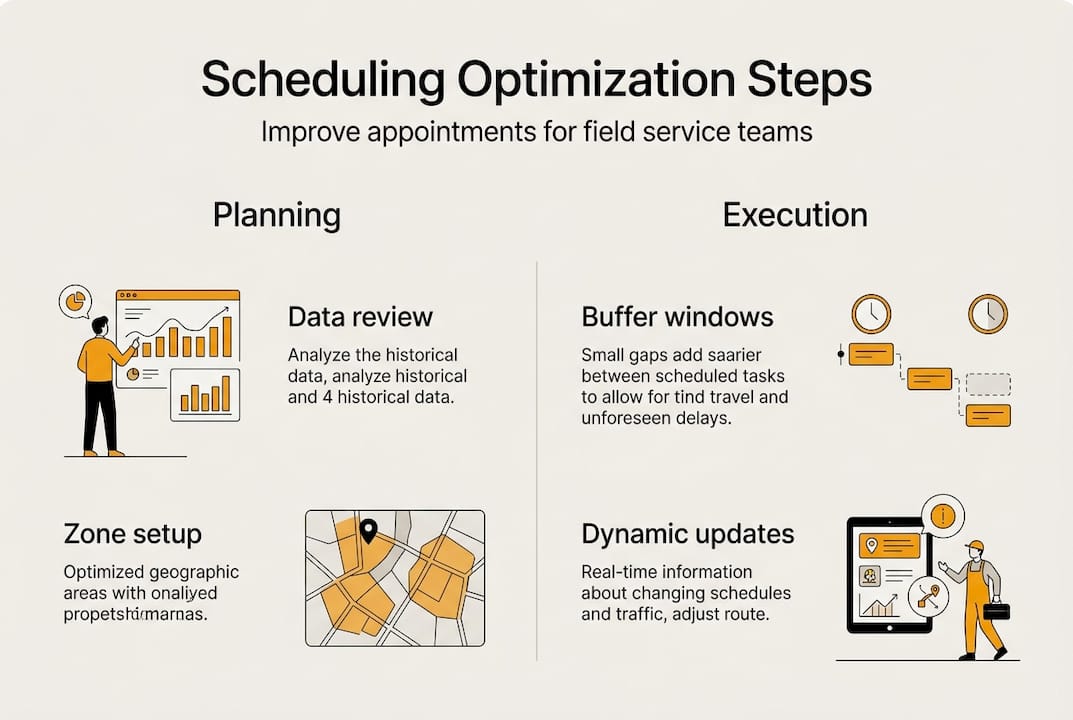
The execution phase reveals whether your preparation was thorough. Missing data about job requirements, inaccurate travel time estimates, or incomplete technician skill profiles will surface as scheduling conflicts. Document these gaps systematically rather than making one-off manual fixes, then update your core data to prevent recurrence.
Verifying and refining your scheduling system for continuous improvement
Measuring scheduling performance requires tracking specific metrics that reveal both efficiency gains and remaining opportunities. Monitor drive time as a percentage of total work hours, targeting the 20-35% reduction that zone-based scheduling delivers. Track billable hours per technician per day, watching for the 1-2 hour increase that indicates successful optimization.
Key performance indicators for scheduling effectiveness:
- Average drive time between appointments by zone and technician
- Percentage of appointments starting within scheduled time windows
- Number of same-day rescheduling events and their causes
- Customer satisfaction scores specifically related to appointment timing
- Technician utilization rates showing balanced workload distribution
- Fuel costs and vehicle wear as proxies for route efficiency
Identifying scheduling bottlenecks requires analyzing patterns rather than individual incidents. If certain time slots consistently remain unfilled, you may need to adjust your availability windows or pricing. Excessive downtime between morning and afternoon appointments suggests zone boundaries need refinement. Recurring late arrivals for specific technicians might indicate skill mismatches or unrealistic job duration estimates.
Regularly update your foundational data to maintain optimization quality. Review zone boundaries quarterly as customer density shifts or new service areas open. Update technician skill databases when team members complete certifications or training. Refine job duration estimates based on actual completion times rather than initial guesses.
"Continuous improvement in scheduling comes from treating your system as a living process, not a one-time implementation. The businesses that see sustained gains review their metrics weekly and make small adjustments rather than waiting for major problems to force large changes."
Customer feedback provides insights that pure efficiency metrics miss. Survey customers about appointment timing convenience, technician punctuality, and communication quality. Low satisfaction despite good on-time performance might indicate your available time windows don't match customer preferences. High satisfaction with occasional delays suggests customers value other factors like technician expertise over rigid timing.
Troubleshooting common scheduling mistakes:
- Over-optimization that creates fragile schedules with no flexibility for real-world variations
- Ignoring technician input during the planning phase, leading to resistance and workarounds
- Failing to account for seasonal demand fluctuations in your scheduling parameters
- Using outdated job duration estimates that no longer reflect current service complexity
- Not building adequate buffer time for travel between distant zones
Adjust scheduling parameters based on accumulated data and technician feedback. If your system consistently underestimates certain job types, increase those duration estimates. When technicians report specific route inefficiencies the algorithm missed, investigate whether additional constraints need programming. The goal is gradual refinement that compounds into significant long-term gains.
Explore field service booking insights regularly to stay current with emerging best practices and new optimization techniques. The scheduling landscape evolves as new algorithms, customer expectations, and competitive pressures emerge. Businesses that treat optimization as an ongoing discipline rather than a completed project maintain their competitive advantage.
Optimize your field service appointments with FieldSlot
Transforming scheduling theory into daily practice requires software built specifically for field service realities. FieldSlot online booking streamlines appointment scheduling with zone-based routing, real-time calendar synchronization, and smart travel buffers that prevent late arrivals. The platform enables 24/7 customer booking through shareable links, eliminating phone tag and capturing jobs you'd otherwise miss.

FieldSlot combines AI-powered optimization with the flexibility field professionals need. Define your service zones to minimize drive time, set technician-specific skills and availability, and let customers book directly into optimized slots. Automated email reminders reduce no-shows while Google Calendar and Microsoft Outlook integration keeps everyone synchronized across devices. Best booking software for field service comparisons consistently highlight FieldSlot's balance of powerful features and simple setup.
The platform deploys in minutes rather than weeks, with no technical expertise required. Start optimizing your schedule today with geographic service area restrictions that prevent unprofitable travel and route optimization that increases your daily job capacity. Follow the service area setup guide to configure zones that maximize your billable hours while reducing technician fatigue and fuel costs.
FAQ
How important is zone-based scheduling for reducing drive time?
Zone-based scheduling reduces drive time by 20-35% for home service technicians like plumbers and electricians. This translates directly to 1-2 additional billable hours per technician daily, significantly boosting revenue without adding staff. The approach clusters appointments geographically, minimizing backtracking and optimizing routes based on actual travel patterns rather than straight-line distances.
What is hybrid human-AI scheduling and why is it recommended?
Hybrid human-AI scheduling balances optimized schedules with technician autonomy to avoid the imbalances pure self-scheduling creates. The system generates AI-optimized routes considering skills, time windows, and zones, then allows technicians to suggest adjustments based on field experience. This preserves most efficiency gains while building trust and accommodating real-world factors the algorithm might miss, like customer-specific considerations or known traffic patterns.
Which scheduling software is best for field service professionals in 2026?
Leading solutions include FieldSlot, which offers robust zone scheduling, AI optimization, and seamless customer booking tailored for plumbers, electricians, and HVAC technicians. Look for software with real-time calendar synchronization, automated reminders, geographic service area restrictions, and dynamic rescheduling capabilities. The best booking software for field service balances powerful optimization with ease of use, enabling quick deployment without extensive training.
How do I measure if my scheduling optimization is working?
Track drive time as a percentage of total work hours, targeting 20-35% reduction from your baseline. Monitor billable hours per technician daily, watching for 1-2 hour increases. Measure appointment punctuality, customer satisfaction scores related to timing, and technician utilization rates to ensure balanced workloads. Compare fuel costs and vehicle maintenance expenses before and after optimization to quantify additional savings beyond direct labor efficiency.
What data do I need before implementing optimized scheduling?
Collect service zone boundaries with realistic travel times, complete technician skill inventories including certifications and specializations, and historical job duration data by service type. Document customer time window preferences and common appointment patterns. Gather GPS or route data from past jobs to validate travel time estimates. Clean and verify this foundational data before launching optimization algorithms, as accuracy matters more than volume for effective scheduling.
Recommended
- Best Booking Software for Plumbers, Electricians & Field Service (2026)
- Blog | FieldSlot - Field Service Booking Insights
- Service Area Setup Guide for Field Service Pros | Reduce Drive Time
- Stop Missing Customer Calls: Online Booking for Plumbers & Electricians
- HVAC Customer Re-Engagement Workflow for Reliable Bookings