
Most heat pump technicians lose 20-30% of their workday to inefficient routing. You drive past the same neighborhoods multiple times, backtrack for emergency calls, and watch fuel costs climb while your appointment capacity shrinks. Poor route planning doesn't just waste time, it directly impacts your ability to serve customers promptly and grow your business. This article shows you how optimized routing reduces travel time and increases the number of customers served daily, giving you practical steps to reclaim those lost hours and boost both efficiency and customer satisfaction.
Table of Contents
- Key Takeaways
- Understanding route optimization and its impact on heat pump technicians
- Comparing optimized routes with standard routing practices
- Factors affecting route optimization effectiveness for heat pump services
- Practical steps and tools to optimize routes as a heat pump technician
- Boost your heat pump service efficiency with FieldSlot
- FAQ
Key Takeaways
| Point | Details |
|---|---|
| Time and fuel savings | Optimized routing cuts driving distance and time, freeing more hours for service work and boosting overall efficiency. |
| More daily jobs | Reducing backtracking and clustering by geography allows technicians to complete more service calls each day. |
| Clustered routes improve reliability | Defining service boundaries and grouping appointments helps set realistic time windows and reduces missed or late arrivals. |
| Leverage scheduling tools | Online booking and route optimization software automate scheduling and drive time calculations so technicians focus on repairs. |
Understanding route optimization and its impact on heat pump technicians
Route optimization means planning your service calls to minimize driving distance and time between appointments while maximizing the number of jobs you complete. For heat pump technicians, this goes beyond simple GPS navigation. You need to account for appointment windows, job complexity, equipment needs, and geographic service boundaries.
Most technicians fall into inefficient routing patterns without realizing it. You might schedule appointments in the order customers call, accept jobs anywhere in your metro area, or fail to cluster similar service types. These habits create zigzag driving patterns that burn hours and fuel. When you drive 40 miles to a maintenance call, then backtrack 35 miles for an emergency repair, you're essentially working two jobs but only getting paid for the actual service time.
Poor routes directly impact your workload balance and stress levels. You rush between appointments, arrive late, and have less time for thorough diagnostics. Customers notice when you're frazzled or behind schedule. They leave negative reviews mentioning tardiness even when your technical work is excellent. Your reputation suffers not because of your HVAC skills, but because of preventable scheduling chaos.
Service area setup helps you define geographic boundaries that keep jobs clustered. When you limit your service radius or divide your territory into zones, you naturally create more efficient daily routes. This simple step eliminates the temptation to accept distant jobs that destroy your schedule.
Pro Tip: Track your actual drive time for one week using your vehicle's trip odometer. Calculate the percentage of your workday spent driving versus working on heat pumps. Most technicians are shocked to discover they spend 35-40% of their day behind the wheel instead of earning revenue.
Route optimization also affects your ability to handle emergency calls. When your scheduled appointments are geographically scattered, squeezing in an urgent repair means massive detours. With optimized routing, you maintain flexibility because your jobs are already clustered, making it easier to divert for a nearby emergency without derailing your entire day.
Comparing optimized routes with standard routing practices
The difference between optimized and standard routing becomes obvious when you examine daily metrics. Standard practice means accepting jobs as they come, driving wherever needed, and hoping you fit everything in. Optimized routing means strategic planning that clusters appointments and minimizes backtracking.
| Metric | Standard routing | Optimized routing |
|---|---|---|
| Daily drive time | 3.5-4 hours | 2-2.5 hours |
| Jobs completed | 4-5 appointments | 6-7 appointments |
| Fuel cost per day | $45-60 | $25-35 |
| On-time arrival rate | 65-70% | 90-95% |
| Customer satisfaction | 3.8/5.0 average | 4.6/5.0 average |
Optimized routes reduce missed appointments because you build realistic schedules. When you know exactly how long it takes to drive between clustered jobs, you set accurate appointment windows. Customers receive reliable time estimates instead of vague "sometime between 1 and 5" promises. This precision builds trust and reduces the frustration that leads to cancellations.
Online booking and route tools can help field technicians perform more jobs effectively by automatically suggesting appointment times based on your existing schedule and location. Instead of manually calculating drive times and availability, the software handles the complex logistics while you focus on technical work.
Route optimization software delivers several concrete benefits:
- Automatic job clustering by geographic proximity
- Real-time traffic updates that suggest alternate routes
- Integration with your calendar to prevent double-booking
- Customer notifications with accurate arrival windows
- Historical data showing your most efficient service patterns
- Fuel cost tracking that quantifies your savings
The cost savings extend beyond fuel. Optimized routing reduces vehicle wear, meaning fewer oil changes, tire replacements, and brake jobs. Your truck lasts longer when you drive 100 fewer miles per week. Insurance costs may decrease when you demonstrate lower annual mileage. These indirect savings add up to thousands of dollars yearly.
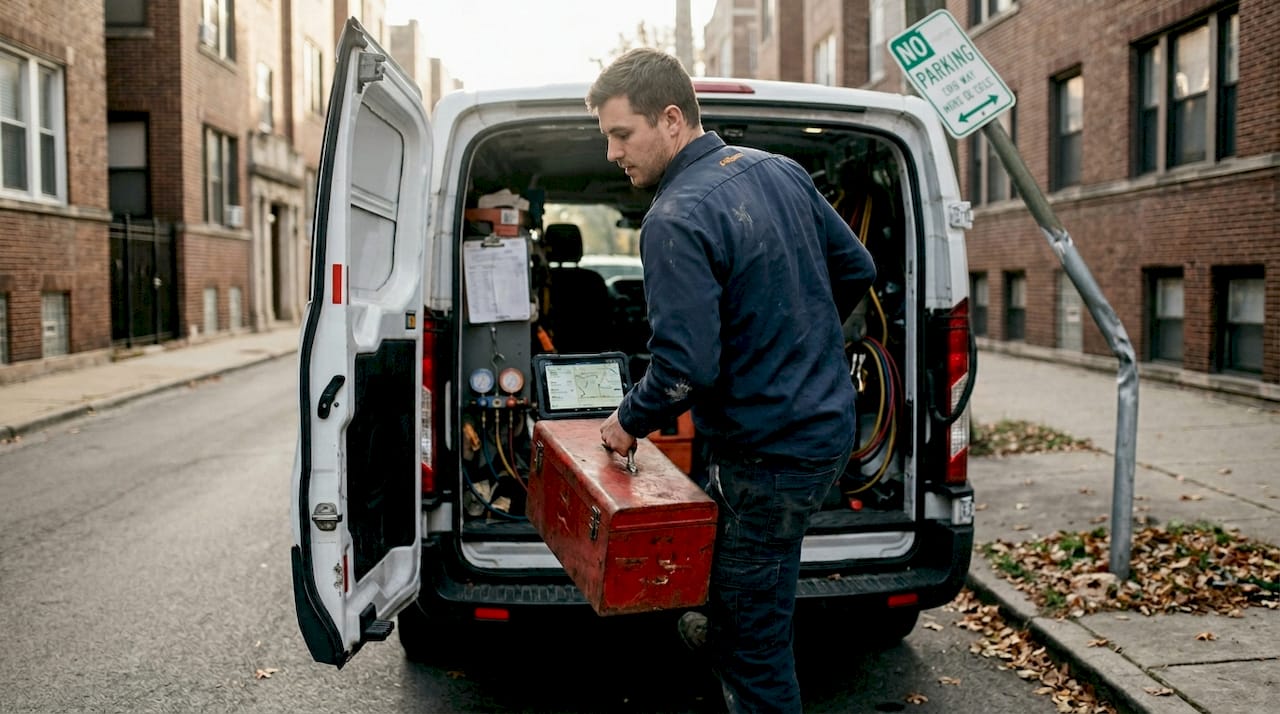
Customer satisfaction improves dramatically with optimized routing. When you consistently arrive within your promised window, customers view you as professional and reliable. They recommend you to neighbors, leave positive reviews, and become repeat clients for annual maintenance. Your reputation grows not just from technical expertise but from operational excellence that customers actually notice.
Factors affecting route optimization effectiveness for heat pump services
Job complexity significantly influences how you should optimize routes. A simple filter replacement takes 30 minutes, while a full system installation requires 4-6 hours. Mixing these job types strategically matters. You might schedule two quick maintenance calls before a major installation, using the smaller jobs to position yourself near the installation site while maximizing morning productivity.
Travel time and service duration must balance for realistic scheduling. If you allocate 15 minutes between appointments but actually need 25 minutes to drive across town, you'll run late all day. Honest assessment of actual drive times beats optimistic guesswork. Factor in traffic patterns too. A route that works perfectly at 10am becomes a nightmare during rush hour.
Customer priorities and preferences add another layer of complexity. Some clients need morning appointments before work, others prefer afternoon slots. Emergency repairs take precedence over routine maintenance. Your route optimization must accommodate these constraints while still minimizing total drive time. This is where manual planning becomes overwhelming and software solutions prove valuable.
Geographic constraints shape your routing options. You might serve a sprawling suburban area where jobs are 15-20 minutes apart, or a dense urban neighborhood where you can walk between appointments. Rural technicians face entirely different challenges with 30-40 minute drives between isolated properties. Your optimization strategy must match your actual service territory.
- Residential density determines realistic job clustering
- Highway access affects time between distant appointments
- Parking availability impacts urban service efficiency
- Weather conditions require buffer time in your schedule
- Equipment needs may require returning to your shop mid-day
Service area setup properly helps reduce drive time significantly for field technicians by letting you define zones where you'll accept work. Instead of serving a 50-mile radius equally, you might focus on a 20-mile core area with premium rates for outer zones. This geographic discipline naturally improves routing efficiency.
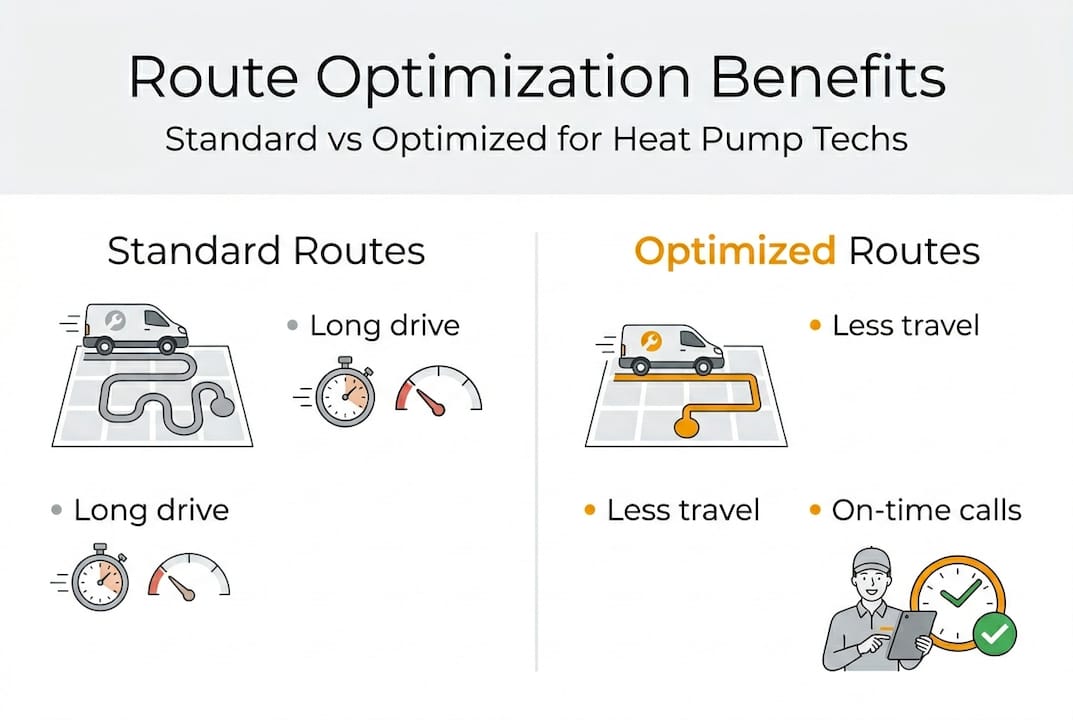
Pro Tip: Create service zones based on 20-minute drive times from your home base or shop. Label them Zone A (closest), Zone B (medium distance), and Zone C (farthest). Try to schedule at least two jobs per zone per day to justify the drive time. Single appointments in distant zones rarely prove profitable once you calculate true costs.
Seasonal factors also affect route optimization. During peak cooling season, you might handle more emergency calls that disrupt planned routes. Winter brings heating emergencies that require flexible scheduling. Your optimization approach should adapt to seasonal demand patterns rather than using the same strategy year-round.
Practical steps and tools to optimize routes as a heat pump technician
Implementing route optimization follows a systematic process that transforms your scheduling approach. Start with these actionable steps:
- Map your current service territory and identify natural geographic clusters
- Calculate actual average drive times between common service areas
- Group similar job types together for efficient scheduling
- Set realistic appointment windows based on measured drive times
- Use booking software that suggests optimal appointment times automatically
- Review your daily routes each evening and adjust the next day's schedule
- Track metrics like jobs completed, drive time, and fuel costs weekly
- Continuously refine your service area boundaries based on profitability data
The right tools make route optimization sustainable rather than a temporary improvement. Modern booking and routing software offers features specifically valuable for heat pump technicians:
| Feature | Benefit | Implementation |
|---|---|---|
| Geographic restrictions | Prevents distant unprofitable bookings | Set service radius in software |
| Travel time buffers | Builds realistic drive time into schedule | Configure based on your area |
| Calendar integration | Syncs with Google/Outlook automatically | One-time setup process |
| Customer self-booking | Reduces phone tag and scheduling errors | Share booking link on website |
| Automated reminders | Decreases no-shows and cancellations | Enable email/SMS notifications |
Integrating online booking with route planning delivers compounding benefits. When customers book appointments through your scheduling software, the system automatically suggests times that fit your existing route. You avoid the back-and-forth of phone scheduling while ensuring new appointments don't create inefficient gaps in your day.
Online booking helps reduce missed calls and supports efficient scheduling by letting customers book while you're working. Instead of losing jobs because you couldn't answer your phone during a repair, customers book available slots 24/7. The software handles scheduling logistics while you focus on technical work.
Many technicians resist scheduling software, assuming it's complex or expensive. Modern solutions designed for field service professionals install in minutes and cost less than a single missed appointment. The learning curve is minimal because the interfaces mirror familiar calendar apps. You're not learning complicated enterprise software, you're using tools built specifically for small trade businesses.
Start small if you're skeptical. Use route optimization for just your maintenance appointments initially, keeping emergency calls flexible. As you see efficiency gains, expand to optimizing your entire schedule. This gradual approach lets you adapt without overwhelming your existing workflow.
Boost your heat pump service efficiency with FieldSlot
FieldSlot combines online booking with intelligent route optimization designed specifically for HVAC and heat pump technicians. The platform handles appointment scheduling 24/7 while automatically clustering jobs to minimize your drive time. You set your service areas, define travel buffers, and let the software suggest optimal appointment times as customers book.
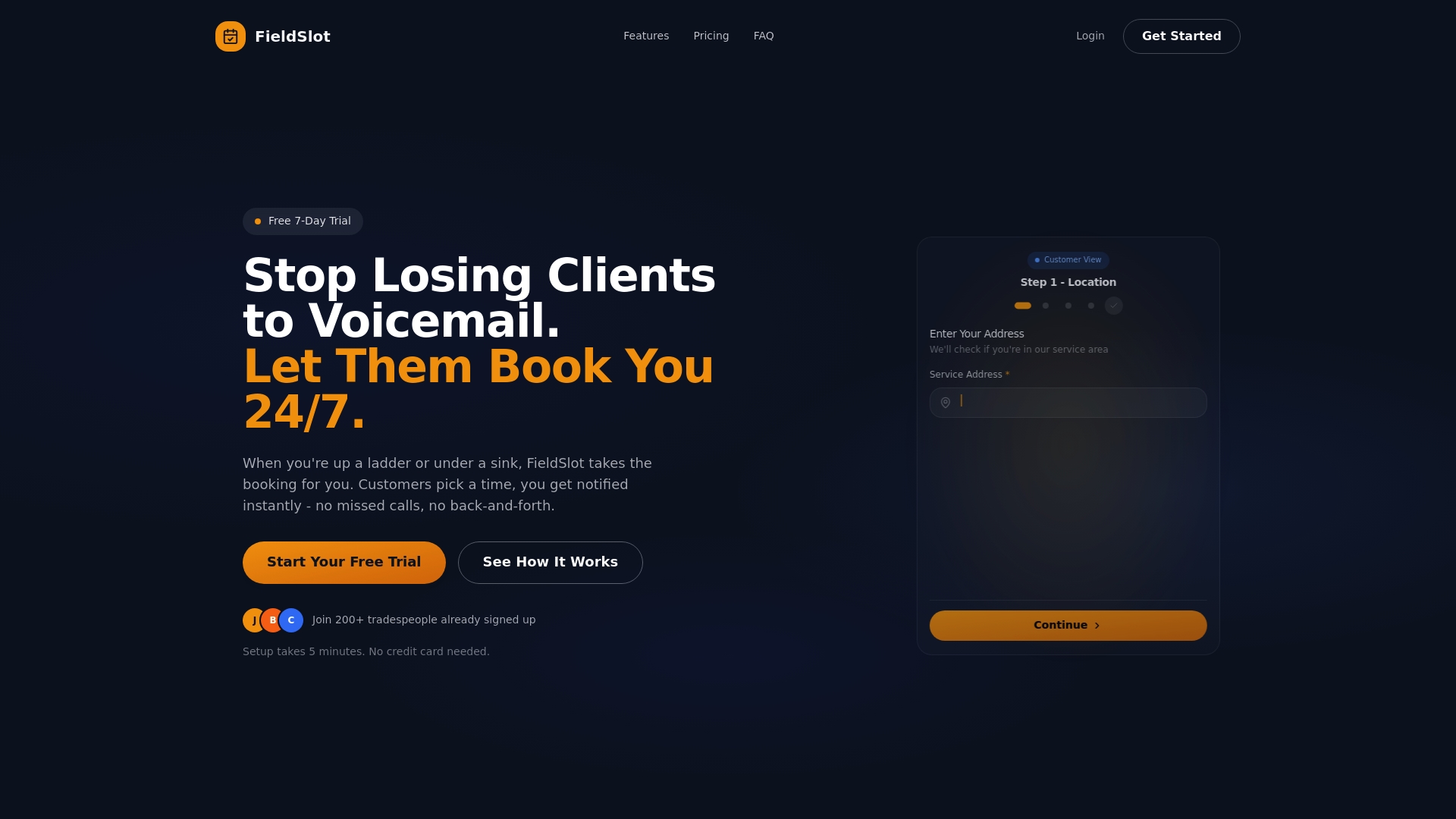
The system integrates with Google Calendar and Microsoft Outlook, syncing appointments across all your devices in real time. Automated reminders reduce no-shows, while geographic restrictions prevent unprofitable distant bookings. Setup takes five minutes, with no technical expertise required. Try FieldSlot to transform your scheduling from daily chaos into optimized efficiency that increases your job capacity and customer satisfaction.
FAQ
Why is route optimization crucial for heat pump technicians?
Route optimization directly impacts your daily job capacity and profitability. Efficient routing lets you complete 2-3 additional appointments per day, translating to 40-60 extra jobs monthly. This increased capacity means more revenue without working longer hours. Additionally, optimized routes reduce vehicle wear and fuel costs by 15-25%, improving your bottom line while decreasing the stress of rushing between scattered appointments.
How does route optimization improve customer satisfaction?
Customers value reliability and punctuality as much as technical expertise. When you optimize routes, you arrive consistently within promised time windows, which builds trust and generates positive reviews. Late arrivals frustrate customers even when your repair work is perfect. Optimized scheduling eliminates most tardiness, leading to higher satisfaction scores and more referrals that grow your business organically.
What's the biggest mistake technicians make with routing?
Accepting jobs anywhere within a large service radius without considering geographic clustering destroys efficiency. You might drive 35 miles north for one appointment, then 40 miles south for the next, wasting hours in transit. Setting defined service zones and scheduling multiple jobs per zone per day prevents this costly pattern. Geographic discipline is the foundation of effective route optimization.
How does route optimization reduce travel time and costs for HVAC technicians?
Optimized routing eliminates unnecessary backtracking by clustering appointments in the same geographic area. Instead of zigzagging across your service territory, you work in concentrated zones that minimize drive time between jobs. This clustering typically reduces daily drive time from 3.5-4 hours to 2-2.5 hours, saving 1-2 hours that you can use for additional appointments or personal time.
Can route optimization help with emergency calls?
Yes, optimized routing actually improves emergency response capability. When your scheduled appointments are already geographically clustered, you can more easily divert for a nearby emergency without destroying your entire day's schedule. You maintain flexibility because you're not scattered across a huge service area. Strategic clustering means emergency calls become manageable detours rather than schedule-wrecking disasters.
What tools can heat pump technicians use to optimize their routes effectively?
Several booking and scheduling platforms offer route optimization features designed for field service professionals. Look for software that provides geographic service area restrictions, automatic travel time calculations, calendar integration, and customer self-booking capabilities. Most platforms offer free trials, letting you test functionality before committing. The best tool is one that matches your specific service territory and business size.
How do I get started with route optimization?
Begin by tracking your current routing patterns for one week, noting drive times, jobs completed, and fuel costs. This baseline data shows where you're losing efficiency. Next, map your service territory and identify natural geographic clusters. Then implement online booking software that suggests appointment times based on your existing schedule and location. Start with optimizing maintenance appointments before expanding to your entire schedule, allowing gradual adaptation to the new workflow.