TL;DR:
- Using multi-channel reminder strategies such as SMS, email, and voice calls significantly reduces no-shows in field service businesses. Personalized and detailed reminders including access instructions and technician info improve appointment adherence. Automated, segmented reminder sequences can cut missed appointments by up to 70%, optimizing scheduling efficiency.
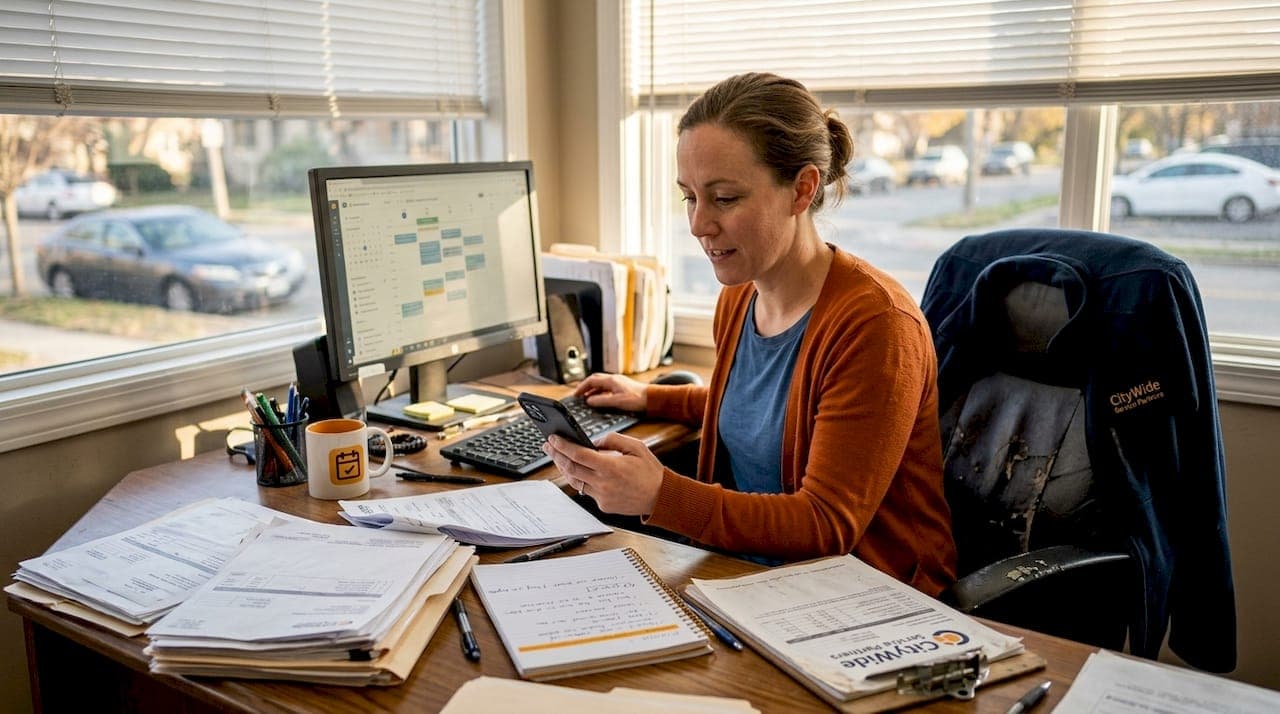
A missed appointment is not just an inconvenience. For a plumber, electrician, or HVAC technician, it means a wasted drive, a gap in the schedule, and lost revenue that is hard to recover. Reminders reduce no-shows by 20 to 70%, making them one of the most cost-effective tools available to field service businesses. But not every reminder type works equally well for every situation. This guide breaks down the main appointment reminder options, compares their strengths and limitations, and gives you a clear framework for building a strategy that fits your trade business.
Table of Contents
- How to choose the right appointment reminder type
- SMS and text reminders: Fast, reliable, and high-impact
- Email reminders: Detailed information and prep instructions
- Voice calls and ringless voicemail: Adding a personal touch
- Push notifications and multi-channel strategies
- Why most reminder strategies miss the mark in field service
- Take the next step: Simplify reminders and boost bookings
- Frequently asked questions
Key Takeaways
| Point | Details |
|---|---|
| SMS drives action | Text reminders have the highest response and cut no-shows drastically for urgent tasks. |
| Email provides details | Email reminders effectively deliver prep instructions and confirmations for complex jobs. |
| Multi-channel is best | Combining SMS, email, and voice reminders delivers up to 70% fewer missed appointments. |
| Tailor to service specifics | Include access instructions and ETA in field service reminders to boost customer readiness. |
| Automation saves time | Using automated tools like FieldSlot ensures reminders go out reliably and efficiently. |
How to choose the right appointment reminder type
Before picking a reminder channel, it helps to think through what your customers actually need and how they prefer to be reached. A one-size-fits-all approach rarely works in field service, where jobs vary from a quick locksmith call to a multi-hour HVAC installation.
Here are the core criteria to evaluate when selecting your reminder method:
- Customer preference: Do your clients respond better to texts, emails, or calls? Older demographics may prefer voice calls, while younger customers tend to favor SMS or app notifications.
- Message complexity: Simple confirmations fit SMS well. Detailed prep instructions, access codes, or documents need email.
- Urgency and timing: Last-minute alerts require fast-delivery channels like SMS. Advance planning reminders work well via email.
- Cost and volume: SMS and email are low-cost at scale. Voice calls take more time and may involve per-minute fees.
- Appointment risk level: High-value or first-time appointments may warrant more touchpoints across multiple channels.
For field service specifically, your reminders should go beyond just the time and date. Customers need to know if they need to be home, whether a gate code is required, if they should move vehicles, or how to prepare for the work. These details reduce friction on the day of the job.
Pro Tip: When you are optimizing appointment scheduling, build reminder templates that include a field for access instructions. A single added line about parking or gate access can prevent a wasted trip.
Research shows that SMS and email combined deliver a 25 to 50% reduction in no-shows for field service businesses. That benchmark makes a strong case for using at least two channels rather than relying on just one. Start by mapping your appointment types to the right reminder mix, and you will already be ahead of most competitors.
SMS and text reminders: Fast, reliable, and high-impact
SMS is the workhorse of appointment reminders. It is fast, direct, and almost always read. For field service professionals who need customers to be ready and waiting, that reliability matters a great deal.
The numbers back this up. SMS open rates reach 98%, and businesses using text reminders see no-show rates drop by 26 to 38%. No other single channel comes close to that performance.
Here is where SMS works best for field service:
- Day-of reminders: Send a text 2 to 4 hours before the appointment so the customer has time to prepare without forgetting.
- ETA updates: Let customers know when your technician is on the way. This reduces calls to your office and improves the customer experience.
- Confirmation requests: Ask customers to reply YES or NO to confirm. This gives you early warning if a job is at risk.
- Last-minute reschedules: If a technician is running late or a slot opens up, SMS is the fastest way to communicate.
Limitations are worth noting. SMS has a character limit, typically 160 characters per message, which means you cannot include detailed instructions. Sending too many texts also risks annoying customers and triggering opt-outs.
Best practice: Limit SMS to two or three messages per appointment. One confirmation at booking, one reminder the day before or morning of, and one ETA update when the technician is dispatched.
Pro Tip: For reducing no-shows with reminders, always include the technician's first name in your SMS. It makes the message feel personal and reduces the chance a customer ignores it as spam.
If you run HVAC scheduling automation, pairing automated SMS with calendar sync means your reminders go out without any manual effort, even when you are knee-deep in a job.
Email reminders: Detailed information and prep instructions
While SMS works for instant reach, email provides a way to send more complete information and instructions. Think of email as your pre-job briefing tool.
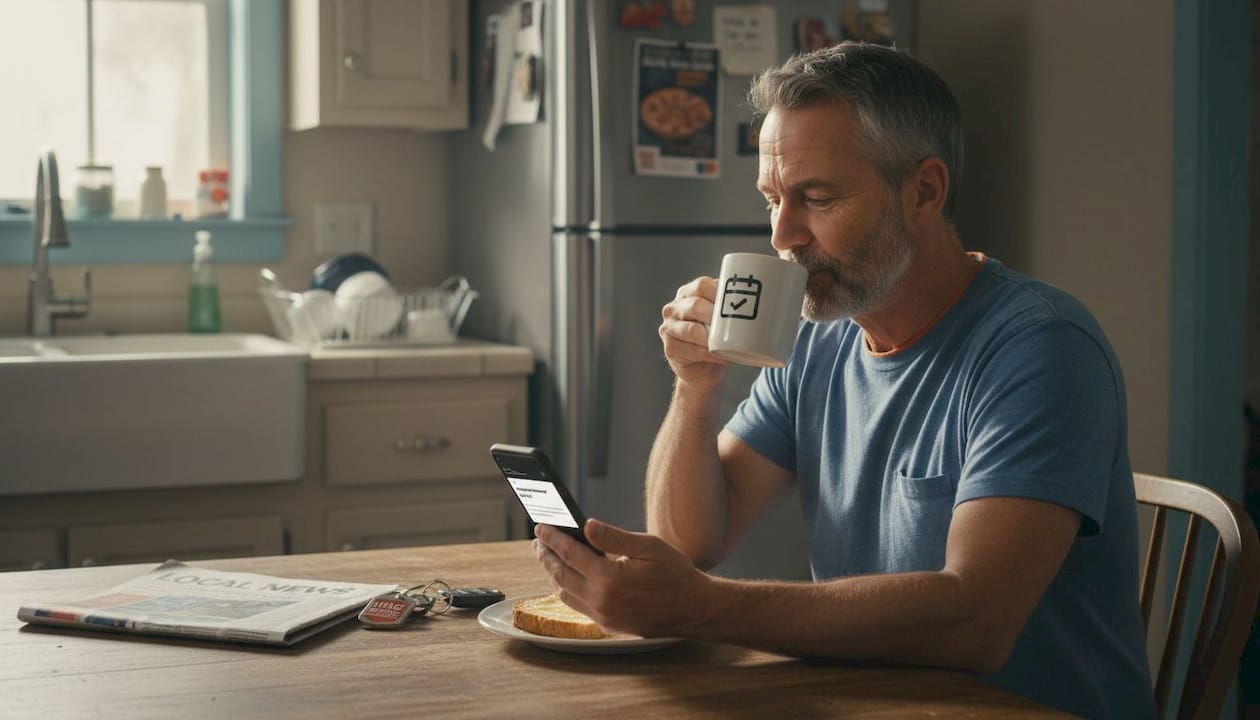
Email reminders are most effective in two scenarios. First, immediately after booking, as a confirmation that includes all job details. Second, 48 to 72 hours before the appointment, when customers have time to read through prep instructions and ask questions if needed.
Here is what email reminders can include that SMS cannot:
- Step-by-step preparation instructions (e.g., clear the area around the water heater)
- Access details such as gate codes, building entry procedures, or parking notes
- Attached documents like service agreements or safety checklists
- Links to reschedule or confirm the appointment online
- Technician photo and name for added trust
The tradeoff is reach. Email open rates average 20 to 35%, which is significantly lower than SMS. Spam filters can intercept your messages, and some customers simply do not check their inbox regularly.
| Feature | SMS | |
|---|---|---|
| Open rate | ~98% | 20-35% |
| Character/content limit | ~160 characters | Unlimited |
| Best timing | 2-4 hours before | 48-72 hours before |
| Rich content support | No | Yes |
| Cost | Low | Very low |
| Best use case | Urgent alerts, ETA | Confirmations, prep info |
Email is especially valuable for complex jobs, first-time clients who need more context, and appointments booked far in advance. When you are scheduling clients efficiently, combining a detailed email confirmation with a short SMS reminder covers both bases without overwhelming the customer.
Voice calls and ringless voicemail: Adding a personal touch
Sometimes, a personal voice on the line makes the biggest difference. Voice reminders carry a level of warmth and urgency that text-based channels cannot fully replicate.
Voice reminders have a 45% answer rate, which is lower than SMS open rates but still meaningful for high-value appointments. A live or automated call signals to the customer that their appointment matters.
When voice reminders make sense for field service:
- High-value jobs: Large HVAC installations, full electrical rewires, or emergency plumbing repairs where a no-show is especially costly.
- First-time customers: A quick call builds rapport and sets expectations before the technician arrives.
- Elderly or less tech-savvy clients: Some customers simply prefer a phone call over a text or email.
- High-risk appointments: If a customer has rescheduled before or has a history of late cancellations, a call adds a personal layer of accountability.
Ringless voicemail is a variation worth considering. It delivers a pre-recorded message directly to a customer's voicemail without making their phone ring. Ringless voicemail is favored in automotive and home services for its personal feel without the interruption of a live call.
| Channel | Answer/open rate | Cost | Best for |
|---|---|---|---|
| Live voice call | ~45% | Higher | High-value, first-time clients |
| Ringless voicemail | Variable | Moderate | Personal touch, non-intrusive |
| SMS | ~98% | Low | All appointment types |
| 20-35% | Very low | Detailed info, advance notice |
The drawbacks of voice include higher cost per contact, time-zone sensitivity if you are calling outside business hours, and the growing preference among younger customers to avoid phone calls altogether. Use voice strategically rather than as a default, and it will add genuine value. You can read more about the impact of reminder types in our detailed breakdown.
Push notifications and multi-channel strategies
Beyond single-channel reminders, combining methods delivers even higher results. This is where your reminder strategy moves from good to genuinely effective.
Push notifications are best suited for technician-facing apps and job management platforms. They alert your team in real time about schedule changes, new bookings, or customer updates. For customer-facing use, push notifications work when customers have downloaded your booking app, which limits their reach for most small trade businesses.
The real power comes from multi-channel sequencing. Multi-channel reminders reduce no-shows by up to 70%, which is the highest benchmark available across all reminder strategies.
Here is the recommended 3-touch sequence that performs best for field service:
- Immediate confirmation: Send an email at the moment of booking with full job details, prep instructions, and a calendar invite.
- 48 to 72 hours before: Send a follow-up email with a reminder of the appointment, access details, and a link to confirm or reschedule.
- 24 hours before: Send an SMS asking the customer to reply YES to confirm. This is your early warning system.
- 2 hours before: Send a final SMS with the technician's name and an estimated arrival time.
This sequence covers every stage of the customer journey from booking to arrival. It gives customers multiple opportunities to confirm, reschedule, or flag a problem before it becomes a wasted trip for your technician.
For automated reminder strategies, the key is setting these touchpoints up once and letting the system handle delivery. That means zero manual effort and consistent communication on every job.
Stat to know: Businesses using a 3-touch reminder ladder see up to 70% fewer missed appointments compared to those using no reminders at all.
Why most reminder strategies miss the mark in field service
Here is an observation worth considering. Most trade businesses that adopt appointment reminders copy a generic template from a software tool and call it done. The message says the appointment is at 10am on Tuesday. That is it.
For a dental office, that might be enough. For a field service business, it is not. Your customer needs to know if they have to be home, whether the dog needs to be secured, if water needs to be shut off, or where to leave the gate key. These are not optional details. They are the difference between a job that runs smoothly and one that gets delayed or cancelled on arrival.
Field service experts prioritize access info over generic reminder text, and the data supports this approach. Small changes to message content, like adding a single line about access requirements, reduce on-site delays and last-minute cancellations significantly.
The other common mistake is treating all appointments the same. A routine annual HVAC service does not need the same reminder intensity as a first-time customer with a complex job. Segment your appointments by risk and value, then match your reminder sequence accordingly. Review your field service reminder benchmarks regularly and adjust your templates based on what is actually reducing missed jobs in your business.
Take the next step: Simplify reminders and boost bookings
Ready to put these strategies into action? FieldSlot is built specifically for field service professionals who want to stop chasing confirmations and start running a tighter schedule.
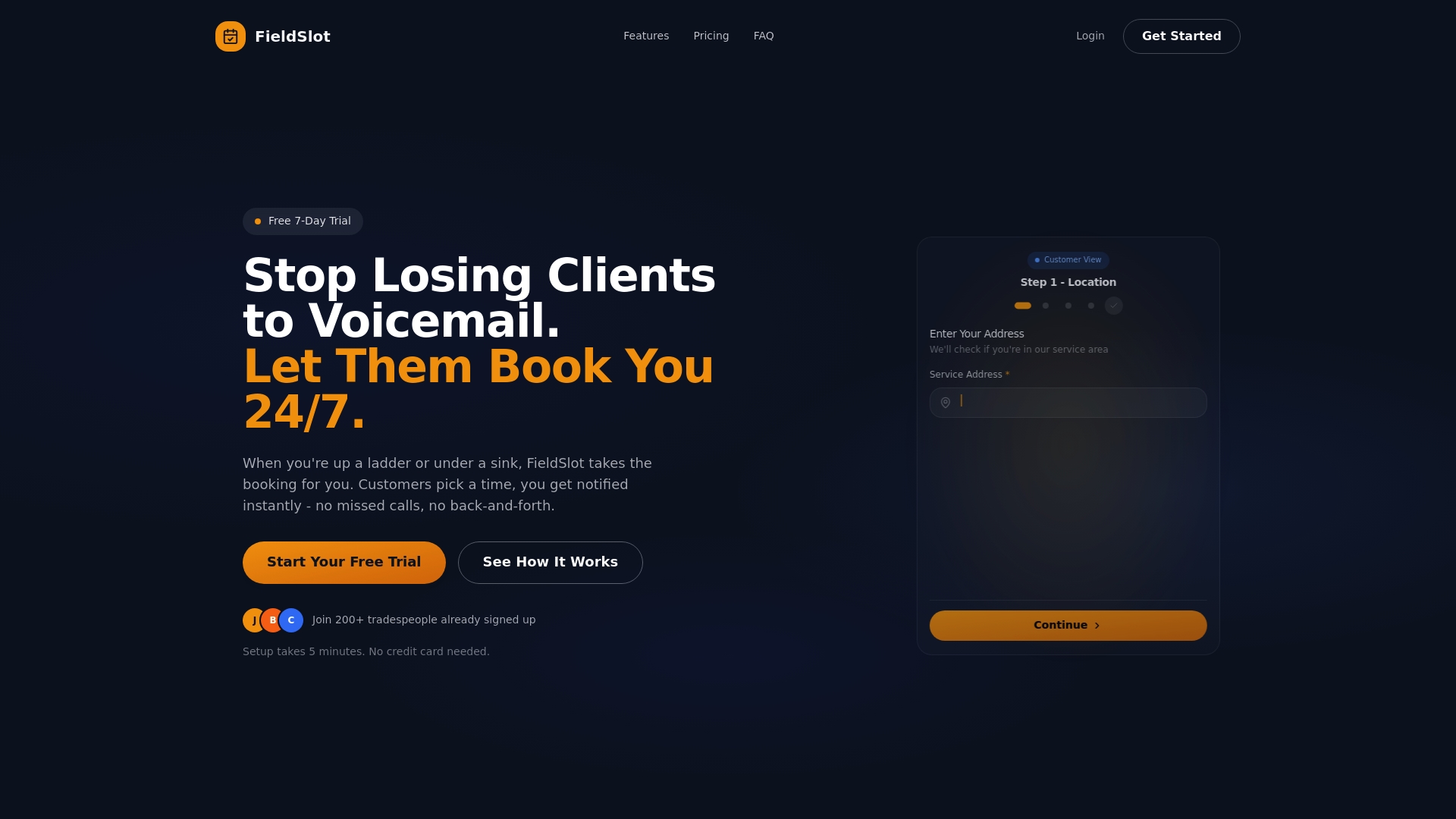
The FieldSlot booking platform automates your entire reminder sequence, from the instant booking confirmation email to the 2-hour SMS nudge before arrival. You can customize message content to include access instructions, technician names, and ETA updates, all without manual effort. Setup takes under five minutes, and the platform syncs with Google Calendar and Microsoft Outlook so your schedule stays accurate across every device. If reducing no-shows and freeing up admin time is a priority, FieldSlot gives you the tools to make it happen.
Frequently asked questions
What appointment reminder type works best for plumbers and HVAC businesses?
SMS is typically the strongest single channel due to its 98% open rate, but pairing it with email for detailed prep instructions gives you the best overall results.
How many reminders should I send before a field service appointment?
A 3-touch sequence works best: an immediate booking confirmation, an email 48 to 72 hours before, and SMS reminders at 24 hours and 2 hours prior to the appointment.
Do appointment reminders really reduce no-shows in field service?
Yes. Field service businesses using SMS and email reminders consistently see no-shows cut by 25 to 50%, with multi-channel strategies pushing that figure even higher.
What details should be included in field service appointment reminders?
Always include access instructions, prep requirements, technician name and ETA, and a request for confirmation so you know the customer is ready and expecting you.
Can using multiple reminder channels improve results?
Absolutely. Multi-channel reminders combining SMS, email, and voice can reduce no-shows by up to 70%, making them the most effective approach for field service businesses.